
Adventures in Studio Lighting
This is part two of three from my weekend at the KelbyOne Summit.
I spend most of my time as a photographer outside. Landscapes, cityscapes, street photography…that’s where I’m comfortable. The light changes, the scene shifts, and you either catch it or you don’t. There’s a certain freedom in that, but also built-in excuses. The cloud that’s killing your highlights…the crowd that won’t disperse. There’s always an extenuating circumstance you can point to when the shot doesn’t work.
In April, I traveled to Tampa, Florida, for the KelbyOne VIP Summit. Those excuses were removed entirely.
KelbyOne is built around photography, Lightroom, and Photoshop education, and its VIP program includes hands-on experiences, coaching, portfolio review, and an invitation to The Summit. The Summit itself is a small, member-focused event built around shooting, learning, and time with other photographers.
As part of the Summit, the group got a tour of the KelbyOne studios. Their crew had set up multiple shooting bays, arranged the lights, and brought in models. Instructors and peers were available to talk you through things if needed. We had a few hours to wander the halls and work with the models and sets. The studio sessions were not just a row of professional setups waiting to be harvested. They were working situations, and each one rewarded a different decision.
As someone who spends most of his time waiting for natural light to cooperate, moving into a controlled studio environment was a complete eye-opener. I typically don’t photograph people, so this was a massive stretch for me. It turned into an amazing experience. Everyone was friendly and professional, and I am blown away with the results.
Moving From Bay to Bay
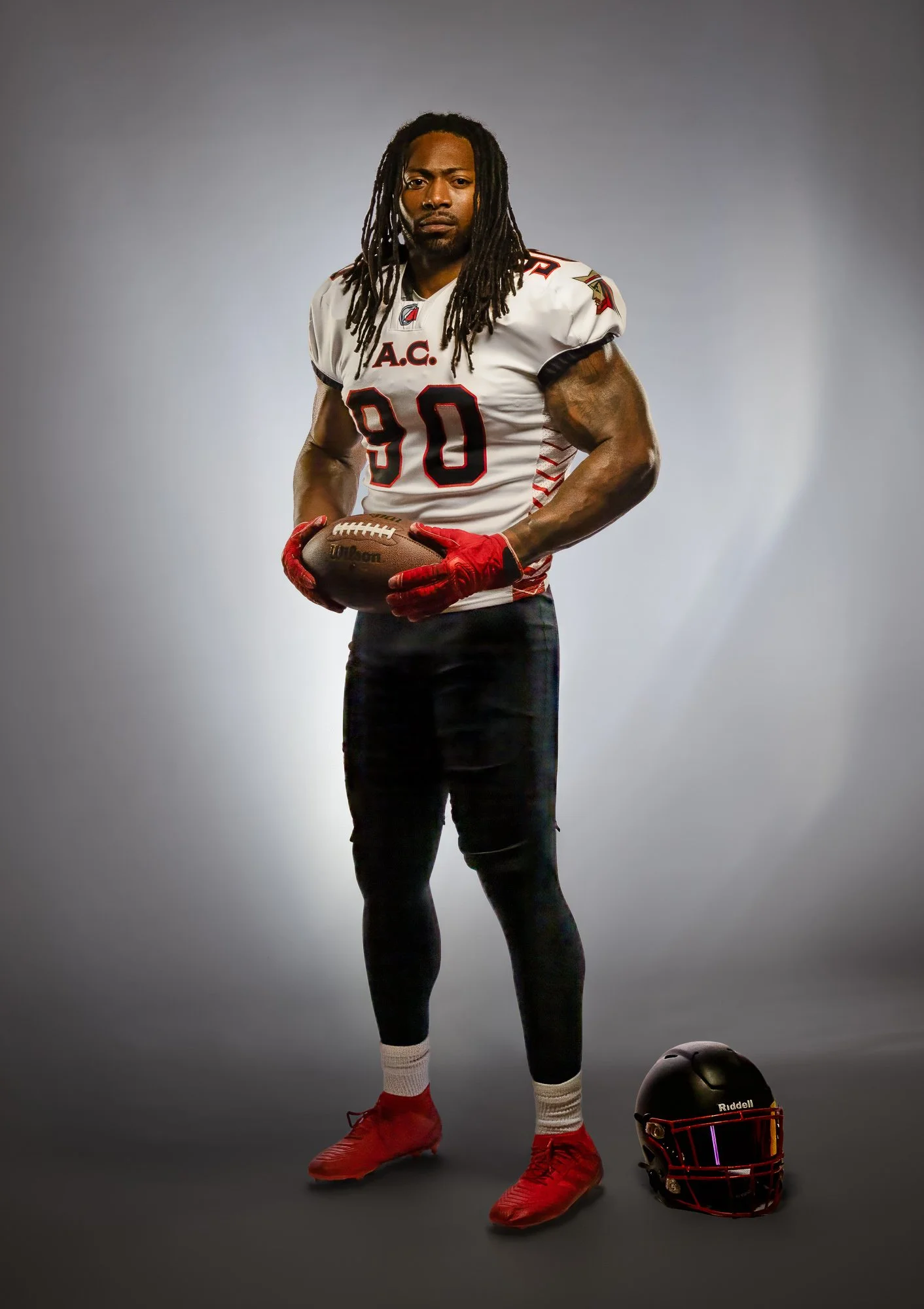
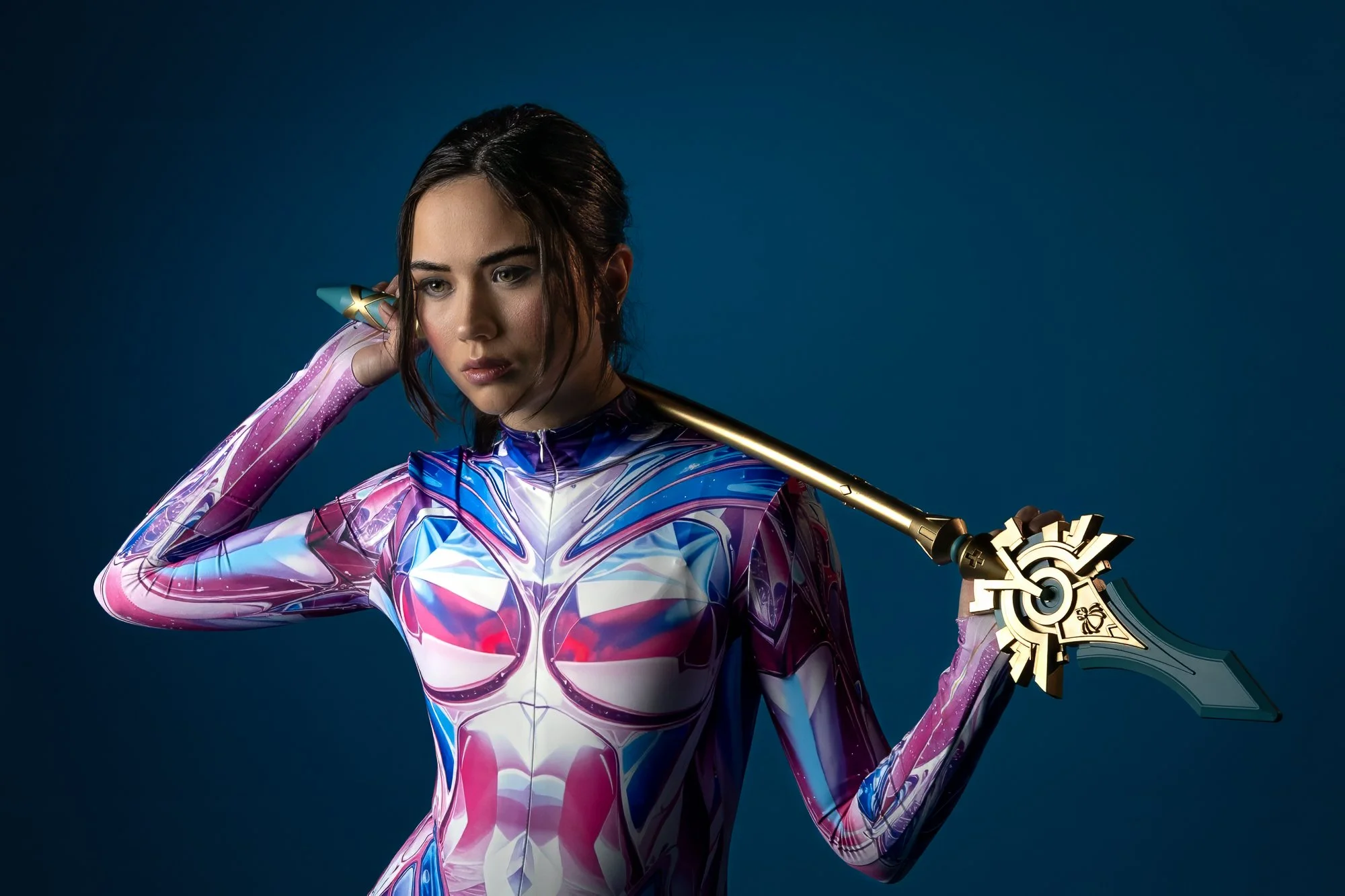
The studio setup worked because each bay had its own theme. One space leaned into athletic portraiture with a football player in uniform, helmet nearby, and a clean gray background. Another was built around rich color and fashion, with a red dress against a red backdrop. Another moved into cosplay and character work, with a bright costume, a prop weapon, and a blue background that gave the whole frame a graphic, comic-book clarity. There was also a miniature set, complete with a small armored figure standing in a weathered, cinematic environment. Nearby, a single white flower became a study in shape, shadow, and restraint. Same building, entirely different photographic problems.
That variety is useful. It keeps you from getting comfortable too quickly.
Removing Light as a Variable
There is a strange little trap in a setup like this. Because the lighting has already been built, it is easy to treat the whole thing like a photo booth. Step in, point the camera, collect something sharp, move on. That is the lazy version.
The better approach is to ask what the setup is giving you and what it still needs from you. The flower photograph is a good example. The subject is simple: a white bloom bending into a black field, lit from the side with enough intensity to carve out the petal edges. There is very little in the frame. The stem angle, the open space, the highlights, the soft falloff into black. That means you compose to make everything that is there count.
The miniature scene had a different demand. It needed scale to feel believable. The figure had to sit inside the set, not look like a toy placed in front of a backdrop five seconds before lunch. Low angle, shallow depth of field, and warm light helped sell the environment. I didn’t quite nail it, but it was still fun to shoot.
Sportraits…If That’s a Thing
The athlete setups were the most straightforward on the surface and probably the easiest to underestimate. A uniform, a football, a helmet, a strong subject. Done, right? Not quite.
Sports portraiture depends heavily on pose and weight. If the stance is weak, the whole frame collapses. In the full-length portrait, the football held at center gives the hands a job and anchors the composition. The helmet on the floor adds context without crowding the frame.
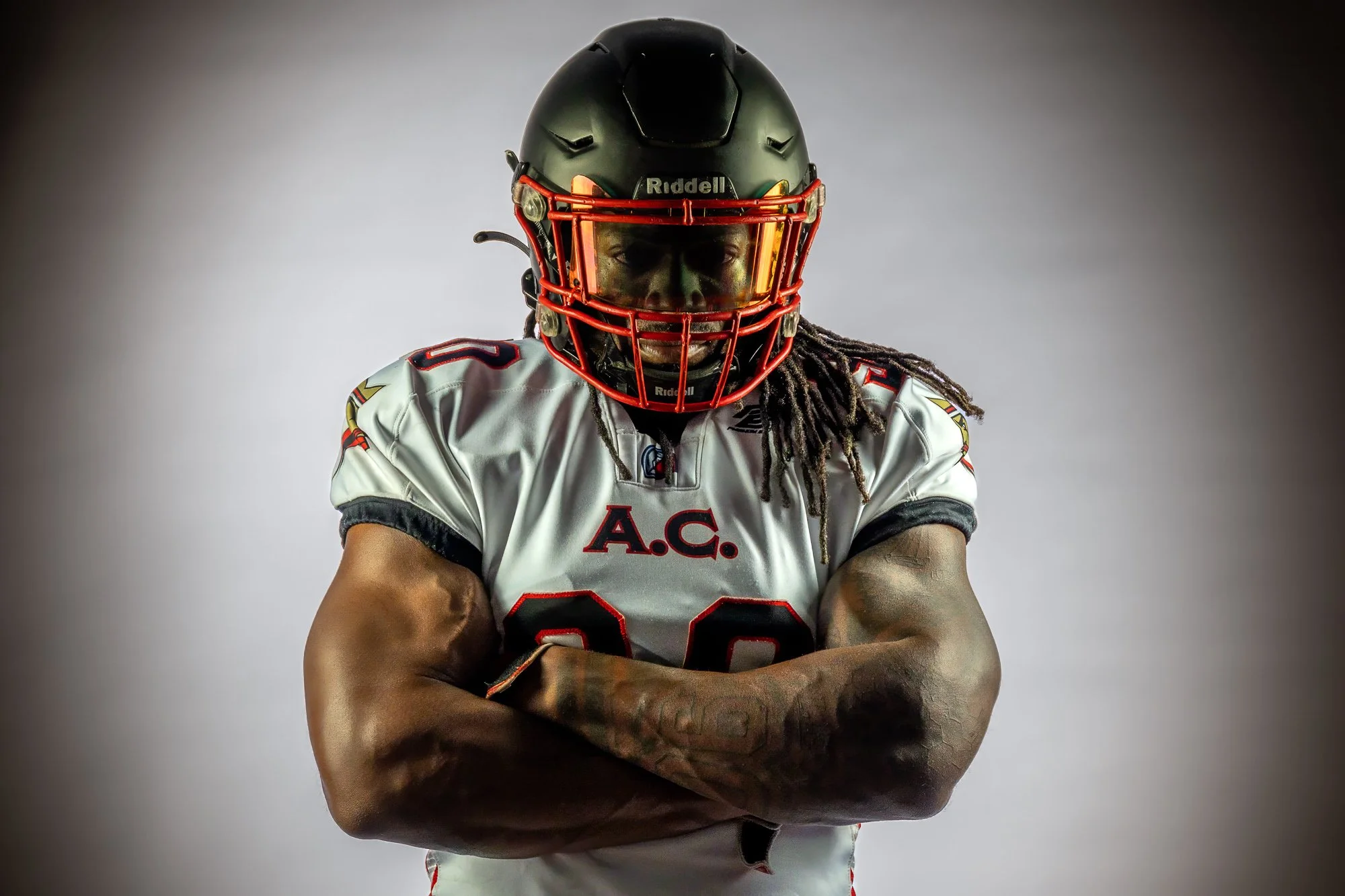
The tighter crop works because it changes the subject from the whole athlete to the presence of the athlete. Arms crossed, helmet on, shoulders squared. It is less about showing everything and more about creating a compact, confrontational shape. The gray background and vignette keep attention where it belongs.
The third frame in the set, closer still, focuses more on the person than the athlete. The jersey is still there for context, but we also get to see a player who loves the game.
Color and Character
The cosplay portrait brought a different kind of visual problem: intense color, reflective fabric, a long prop, and a pose that needed to feel graphic without throwing off the balance. The blue background was the right call. It keeps the magenta, white, and metallic tones from fighting for air. The prop creates a diagonal line across the frame, which gives the composition structure. Without that, the image could easily become only about costume detail. Detail is nice, but structure is better.
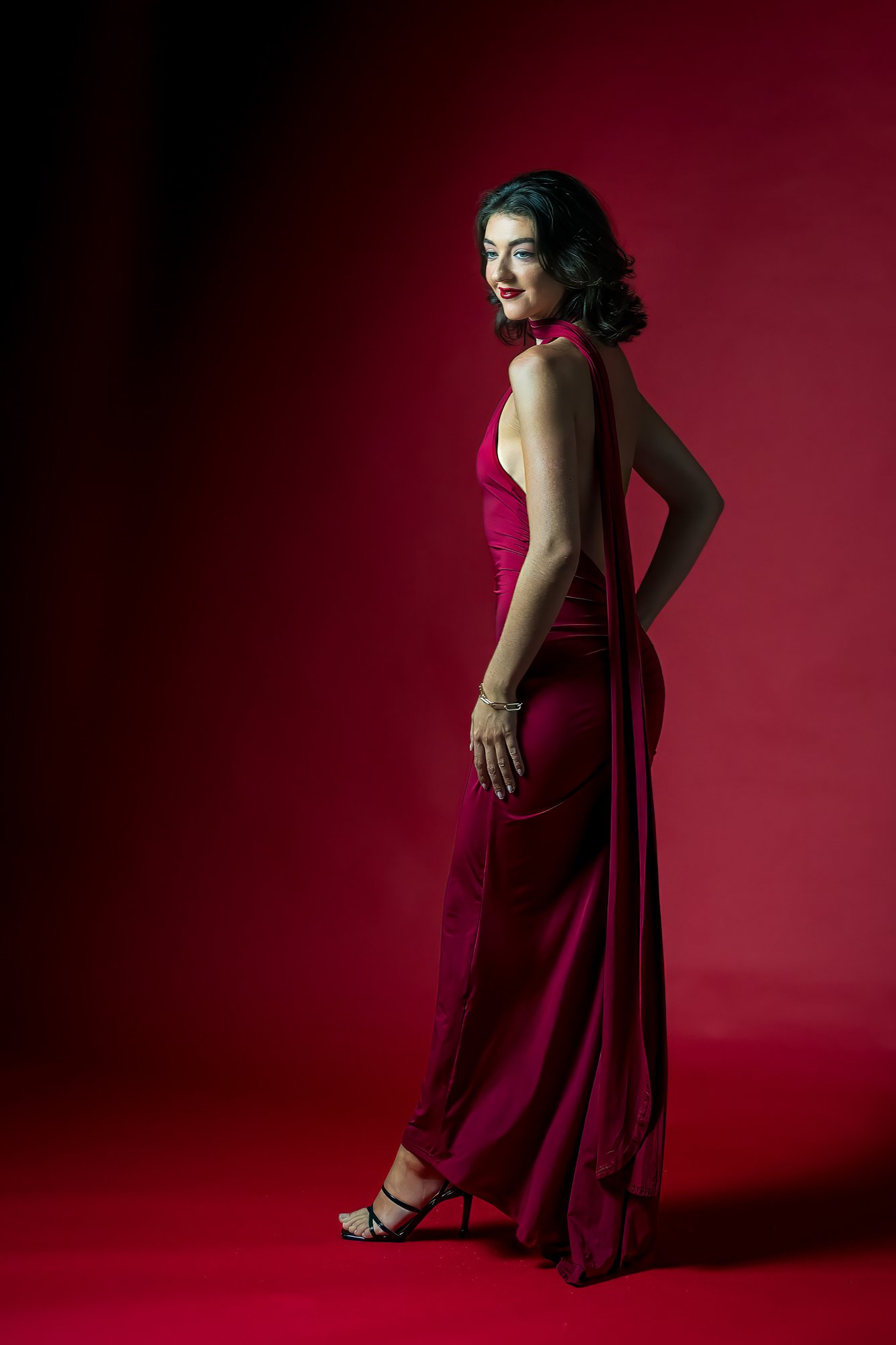
The red fashion setup was a different kind of exercise. The background, floor, and dress stayed in the same color family, so the photograph depended on separation, posture, and careful control of highlight and shadow. When color dominates that strongly, the small things matter more. A hand position, the line of the dress, the angle of the shoulder, and the edge light all become structural. The frame gives the subject room on the left, which lets the light and shadow breathe. It is not overfilled. The image is not about excess. It is about getting the shape to hold.
Finding the Frame
A studio session like this is useful because it compresses several kinds of photographic thinking into a short period of time. You move from flower detail to fashion portrait, from sports intensity to miniature set work, from color control to tonal restraint. Each setup already has professional polish, which sounds like a gift until you realize polish can hide weak decisions. Good production value does not automatically make a good photograph. It just removes a few obstacles.
The photographer still has to choose where to stand. The photographer still has to notice what the light is doing, what the background is doing, and whether the subject has enough visual structure to hold the frame. That is the part I enjoyed most. The Summit gave us access to sets that were already built well, then left enough room for each photographer to make different choices inside them. The photograph still has to be made.
Special Thanks to the Models:
Monte’ Lewis | @mlewis_90
Sarah | @bxmbd0g
Kasey Kellenberger | @kaseyyyy_k
Valeria | @valerxia
Mason Maloni | @mason_maloni